
September 19, 2026 | Explainer
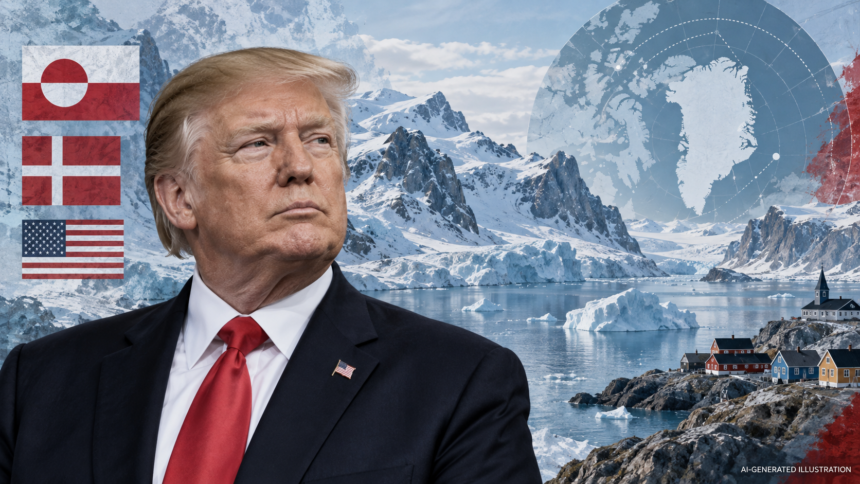
President Donald Trump’s newly announced Greenland security agreement could expand America’s military role in the Arctic. Denmark and Greenland say it preserves the Kingdom of Denmark’s sovereignty and Greenlanders’ right to determine their own future. The scale of the planned military expansion and the precise limits of Washington’s authority remain unclear. Reuters
The agreement was not yet in force as of September 19, 2026. Denmark and Greenland said they expected to sign it during the following week’s United Nations General Assembly, with parliamentary procedures required afterward. The announcement therefore should not be described as a new law that has already taken effect. ABC News
America already has substantial military rights under the 1951 defense agreement. Signed on April 27, 1951, and effective from June 8 that year, the agreement allows the United States to construct and operate military facilities, station personnel and provide security within agreed defense areas. Article V also provides access and overflight rights, subject to the agreement’s conditions.
Article II explicitly preserves Danish sovereignty. It also provides for the two governments to agree on additional defense areas. Operating an American base does not, under these provisions, make the surrounding territory American.
The agreement’s duration is linked to the North Atlantic Treaty. That matters when assessing promises of permanent access: the existing arrangement already provides a long-term legal basis for the U.S. presence. 1951 agreement, Articles II, V and XIV
The 2004 Igaliku agreement strengthened Greenland’s involvement. It amended the earlier defense arrangement and entered into force when signed on August 6, 2004. The agreement included Greenland’s Home Rule government within the Danish side of the arrangement.
It identified Thule Air Base as Greenland’s only designated defense area and retained the 1951 rules for establishing additional areas. It also required Washington to consult and inform Denmark, including Greenland’s government, before significant changes to American military operations or facilities.
That consultation requirement should be distinguished from a blanket right to veto every operational decision. The agreement also clarified that relevant NATO Status of Forces Agreement provisions superseded the original 1951 rules on jurisdiction. Reading the original treaty alone therefore gives an incomplete picture of the applicable framework. 2004 agreement, Articles 1–4
Greenland’s civilian government rests on a separate legal framework. The Self-Government Act took effect on June 21, 2009, replacing the Home Rule arrangement introduced in 1979. It expanded Greenland’s ability to assume responsibility for domestic policy areas. Defense and security policy remain responsibilities of the Kingdom of Denmark.
Greenland subsequently assumed responsibility for mineral resources on January 1, 2010. Military access and authority over mining are consequently different legal questions; the existing defense arrangements should not be read as automatically giving Washington ownership of Greenland’s resources. Danish Prime Minister’s Office
Section 21 of the Self-Government Act sets out the route to independence. The decision begins with Greenland’s people. A decision in favor of independence would trigger negotiations between Greenland’s government and Denmark. An independence agreement would then require Greenland’s parliament’s consent, endorsement in a Greenland referendum and the Danish parliament’s consent.
This means Greenland’s constitutional future has an established process involving its own population and institutions. A security announcement by the U.S. president does not itself complete that process. Self-Government Act, Section 21
The proposed 2026 deal focuses on military access and restrictions on rival powers. A State Department official described permanent access, basing and overflight rights. Trump said adversaries would need express American approval for military activity or sensitive investments. ABC also reported that neither China nor Russia currently has a significant military presence or significant active investments in Greenland. ABC News
A U.S. official told Reuters that the arrangement would continue even if Greenland became independent. That is the administration’s account of the intended provision; its precise legal operation cannot be assessed from the announcement alone. Publication of the agreement will be essential to understanding what obligations it creates. Reuters
The main differences can be compared as follows:
| Issue | Existing framework | Announced 2026 arrangement |
|---|---|---|
| U.S. military access | Extensive rights already exist under the 1951 agreement. | Officials describe permanent access and a larger presence. |
| New defense areas | The 1951 framework provides for agreement between governments. | The precise authorization process remains to be clarified. |
| Greenland’s sovereignty | Preserved in the existing defense agreement. | Denmark and Greenland say it remains protected. |
| Sensitive investments | The 1951 agreement does not establish the announced screening system. | Trump describes restrictions on adversaries requiring U.S. approval. |
| Legal status | The 1951 agreement and 2004 amendment are already operative. | Signature and parliamentary procedures remain pending. |
The comparison draws on the 1951 treaty, 2004 amendment and the reported announcement.
A recent law already in force concerns political donations. Greenland’s Act No. 14 of February 4, 2025, tightened party-finance rules. Its commencement provision specifies the day after official publication, and the official legal register lists it as current. This was legislation adopted in Greenland, separate from the September 2026 security agreement. 2025 amending act
Previously, the 2011 party-accounts law, effective from January 1, 2013, principally required financial disclosure. It required identification of donors whose annual contributions exceeded DKK 10,000 and explicitly required reporting of anonymous donations. The original text did not contain the later ban on foreign and anonymous contributions or the new annual contribution caps. Original 2011 law
The amended rules now:
- Prohibit anonymous donations and contributions from donors resident or based outside Greenland, subject to an exception for registered political parties within the Kingdom of Denmark.
- Apply the foreign and anonymous donation restrictions to party branches and specified politicians and candidates as well as parties