
Week of August 31 – September 5, 2026
Summary
President Donald Trump closed out the first week of September with two new executive orders on American ranching, a pledge to hit the campaign trail hard, and two significant setbacks in federal court — one on mail-in voting, the other on birthright citizenship. With the November 3 midterm elections now under two months away, the week made clear that the fight over how Americans will cast their ballots has become the defining domestic story of the fall.
The Midterms Reshape Everything
Almost every major move this week carried an election shadow.
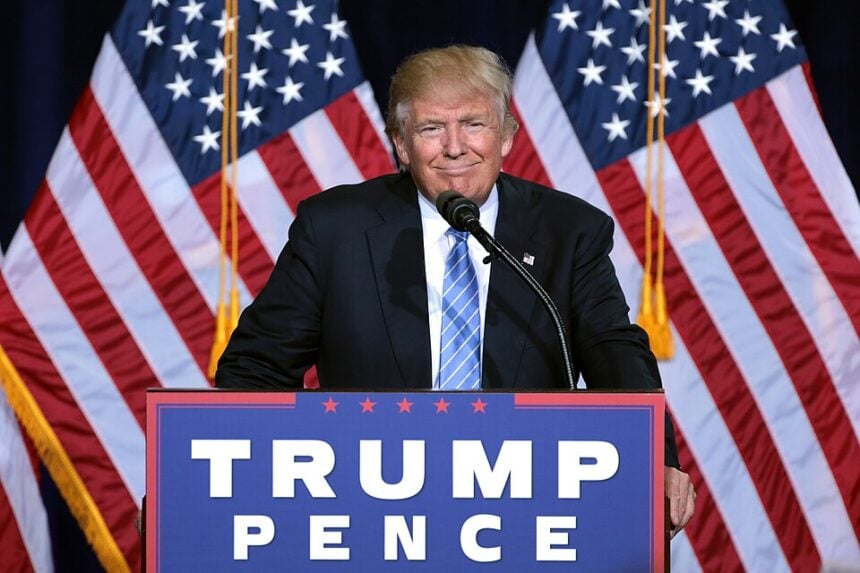
Trump told reporters he intends to launch a blitz of campaign travel in the final 30 days before an election that does not obviously favor his party. He declined to name a state count, saying only that he would “be making a lot of stops,” including an appearance in Alaska alongside Sen. Dan Sullivan. He also offered a lengthy defense of Texas Attorney General Ken Paxton, brushing aside criticism of Paxton’s style before praising his record.
Congress, meanwhile, is heading for the door. House Republican leaders canceled the final two weeks of September session, meaning the chamber will return for only one more week this month before leaving until after the election. The practical effect: no major legislation was signed into law this week, and none is likely before November. The action has shifted almost entirely to executive orders and the courtroom.
Executive Orders: Ranchers First
The week’s only new presidential directives arrived Friday afternoon.
On September 4, Trump signed two executive orders supporting America’s ranchers, while Agriculture Secretary Brooke L. Rollins announced four additional USDA actions aimed at protecting the national cattle herd and providing transparency for consumers. The package builds on the 2025 USDA Beef Plan and the Ranchers First Initiative unveiled earlier in the week.
Among the accompanying measures: increased funding for the Veterinary Medicine Loan Repayment Program and the Veterinary Services Grant Program, a doubling of USDA veterinary scholarships to $40,000 per year, and $7.5 million invested in cold-chain equipment for food banks.
Trump signed the orders at 1:30 p.m. before departing for Bedminster, New Jersey.
The Mail-In Ballot Battle Reaches the Supreme Court
This was the week’s biggest story, and it moved twice.
On Thursday, the Justice Department filed an emergency application asking the Supreme Court to let the U.S. Postal Service enforce a new rule tightening mail-in ballot procedures. The rule was adopted following an executive order restricting mail voting, and had been frozen days earlier by a federal judge in Boston.
Solicitor General D. John Sauer argued the lower court’s handling of the case was “baseless” and that an immediate stay was warranted.
Under the policy, states must report basic voter information — name and home address — attached to a unique barcode on every mail-in ballot distributed, with postal workers delivering ballots only to voters appearing on the state-provided list.
Then, on Friday, the picture flipped again. U.S. District Judge Indira Talwani temporarily blocked the effort a second time, just as one state began mailing out ballots, siding with states and voting rights groups who argued the rule unlawfully usurped state authority over elections and imposed an impossible compliance timeline. She found that voter disenfranchisement would be “practically inevitable” if the rule survived.
The challenging states have until Tuesday, September 8, at 10 a.m. to respond before the justices rule.
Birthright Citizenship Order Blocked Again
On Wednesday, a federal judge in Maryland halted Trump’s renewed attempt to narrow birthright citizenship — his second try after the Supreme Court struck down a broader version earlier this year.
U.S. District Judge Deborah Boardman wrote in a 35-page ruling that the August 6 order is “almost certainly unconstitutional,” citing the Supreme Court’s June decision against the earlier attempt.
The order had directed federal agencies not to recognize the citizenship of children whose parents are not citizens if either parent is an “alien enemy,” a “foreign government employee,” or engaged in so-called birth tourism.
The White House pushed back hard. Spokeswoman Lauren Bis dismissed the decision, saying: “This is just another ruling from an activist judge appointed by Biden.”
Iran: No Breakthrough on Hormuz
Six months into the conflict, the Strait of Hormuz crisis remains unresolved.
Analysts continued to question the administration’s economic pressure campaign, unveiled the previous week and billed as an “Economic D-Day” aimed at forcing Iran to reopen the Strait of Hormuz and return to the negotiating table. The Wall Street Journal noted that decades of sanctions experience with Cuba, North Korea, Venezuela and Syria suggest authoritarian governments can absorb economic pain for years.
Shipping traffic through the waterway remains far below pre-war levels, keeping upward pressure on global energy prices — an issue with obvious domestic political consequences in an election year.
Also This Week
- Missouri map struck down. The Missouri Supreme Court ruled that a new Republican-drawn congressional map cannot be used in this year’s midterm elections.
- A viral fake. A screenshot circulating as a Trump “Labor Day message” about holidays costing the country billions was debunked; the post was authentic but made on June 19, 2025, not in 2026. Former Rep. Marjorie Taylor Greene criticized it on X on September 2 before the correction spread.
- New institute launched. Secretary of State Marco Rubio delivered remarks on September 3 at the launch of the Foundry School at the Donald J. Trump Institute of Peace in Washington.
What to Watch Next Week
- The Supreme Court’s mail-ballot decision, expected shortly after the September 8 deadline for state responses.
- The start of Trump’s campaign travel schedule, and which candidates welcome him.
- Whether the House uses its single remaining September week for anything beyond routine business.