
A new federal proposal could reshape which wetlands, streams and other bodies of water fall under the Clean Water Act — a technical legal question that can have very practical consequences for Americans who own, farm or develop land.
- Why does the definition of WOTUS matter?
- What is the EPA proposing now?
- Why did the Supreme Court change the rules?
- Could this make it easier to build on some land?
- Could some wetlands lose federal protection?
- What does “continuous surface connection” actually mean?
- Why is EPA asking for comments again?
- What happens next?
On September 4, the Environmental Protection Agency and the U.S. Department of the Army announced that they are seeking additional public input on how the federal government should define “waters of the United States,” commonly shortened to WOTUS.
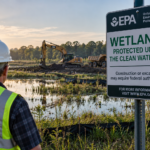
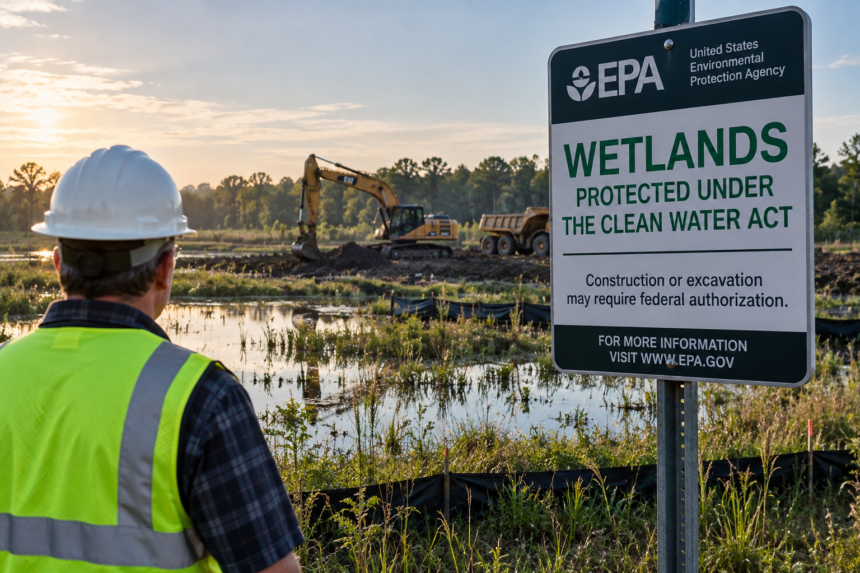
That definition matters because it helps determine where federal Clean Water Act protections apply and, in some cases, whether landowners need federal approval before carrying out work that affects wetlands or waterways.
The latest proposal is not yet a final rule. Instead, the agencies are considering additional regulatory options before deciding on a permanent definition.
Why does the definition of WOTUS matter?
The Clean Water Act protects certain waters from pollution and regulates activities that can discharge material into covered waterways.
But Congress did not provide a simple list of every stream, pond or wetland that counts as a “water of the United States.”
That has produced decades of court cases, regulatory changes and political disputes.
For a landowner, the difference can be significant.
A wet area on a property that falls under federal jurisdiction may be subject to Clean Water Act permitting requirements. A similar area outside federal jurisdiction may instead fall mainly under state or local regulation.
That means the legal definition can affect farmers, ranchers, homebuilders, energy companies and ordinary homeowners.
What is the EPA proposing now?
The EPA and Army are asking the public to comment on several possible definitions.
One proposal would define a “perennial” waterbody as one containing standing or continuously flowing water every day of the year under ordinary conditions.
The agencies are also considering how to define the phrase “relatively permanent,” including whether federal jurisdiction should focus primarily on waters that remain present throughout the year, except during unusual droughts or temporary interruptions.
Another major question concerns wetlands.
The proposal considers a definition under which a wetland would need a continuous surface-water connection with a federally covered waterbody, making it difficult to tell where the water ends and the wetland begins.
That may sound like legal wording, but it could determine whether thousands of acres of wetlands fall under federal protection.
Why did the Supreme Court change the rules?
The latest debate goes back to a major 2023 Supreme Court decision, Sackett v. EPA.
The case involved Michael and Chantell Sackett, who wanted to build a home on property near Priest Lake in Idaho.
EPA officials concluded that wetlands on their property were covered by the Clean Water Act.
The Sacketts challenged that decision.
The Supreme Court ultimately ruled that the Clean Water Act covers adjacent wetlands only when they have a sufficiently continuous surface connection with waters that themselves qualify as waters of the United States.
The ruling significantly narrowed the circumstances in which some wetlands can be regulated federally.
EPA and the Army have since been working to rewrite regulations around that decision.
Could this make it easier to build on some land?
Potentially, yes.
If the final definition excludes certain wetlands or temporary waterways from federal jurisdiction, some landowners may face fewer federal permitting requirements.
That does not necessarily mean they can develop the land without restrictions.
States can maintain their own environmental protections, and local planning, zoning and water-quality rules may still apply.
But narrowing federal jurisdiction could reduce one layer of regulation for some projects.
EPA says one of its goals is to reduce regulatory uncertainty for landowners, farmers, ranchers, developers and businesses while still protecting water quality.
Could some wetlands lose federal protection?
That is the other side of the debate.
Wetlands can store floodwater, filter pollution and provide habitat for wildlife.
A narrower federal definition could mean that some wetlands previously covered under the Clean Water Act would no longer receive the same federal protections.
Environmental groups have argued for years that limiting federal jurisdiction can leave important wetlands vulnerable, particularly in states with weaker protections.
Supporters of a narrower rule argue that Washington has historically stretched the meaning of the Clean Water Act too far and created uncertainty for property owners.
The legal fight therefore involves two competing questions: how broadly should federal environmental law reach, and how much authority should remain with states?
What does “continuous surface connection” actually mean?
This phrase has become central to the legal debate.
In the Sackett decision, the Supreme Court said wetlands generally need to be so closely connected to covered waters that it becomes difficult to determine where one ends and the other begins.
EPA is now considering how strict that test should be.
Its latest proposal explores whether temporary interruptions — such as low tides, droughts or short dry periods — should still allow a water connection to count as continuous.
One option discussed by the agencies would tolerate some temporary interruptions lasting no more than 30 consecutive days in a year under certain conditions.
That detail could become extremely important in dry regions where streams or wetlands do not hold visible water every day.
Why is EPA asking for comments again?
EPA already received more than 220,000 public comments on its earlier 2025 proposal.
But instead of moving directly to a final rule, the agency has now opened consideration of additional alternatives.
The new public-comment period will last 30 days once the supplemental proposal is formally published in the Federal Register.
The agencies say they have not yet predetermined which version will become the final rule.
What happens next?
The EPA and Army will review the new public comments alongside the feedback received on the earlier proposal.
A final rule could then establish the federal government’s latest interpretation of WOTUS.
But history suggests the issue may not end there.
Different presidential administrations have repeatedly rewritten the definition, while courts have continued to hear challenges from states, industry groups, environmental organizations and landowners.
Any final rule could therefore face another round of litigation.
For homeowners, farmers and developers, the important point is that a seemingly technical phrase — “waters of the United States” — can determine whether federal environmental law reaches onto private property.
And with the government now reconsidering exactly where that line should be drawn, the consequences could extend far beyond Washington.